How to volunteer in medical relief work
- General articles
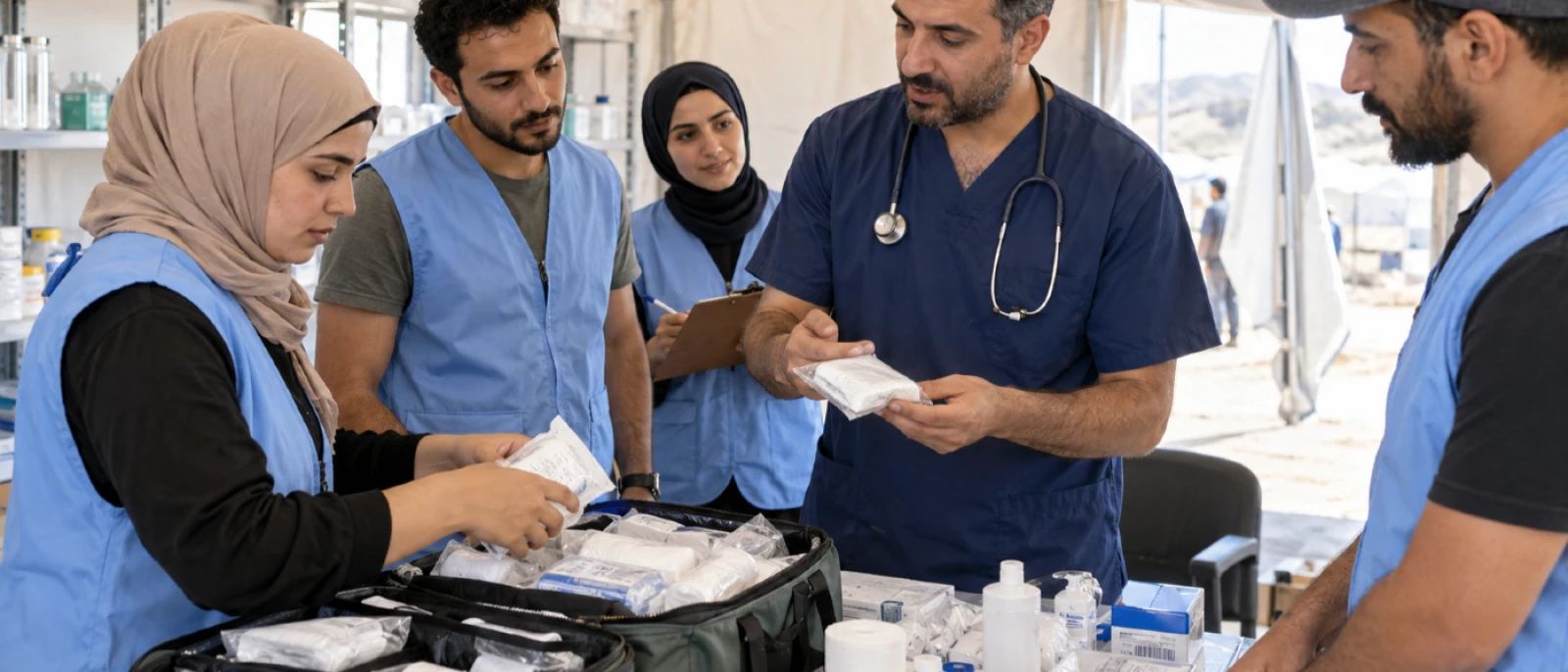
How do you volunteer in medical relief work?
The desire to volunteer often begins with a simple question: what can I contribute? In medical relief work, this desire becomes more useful when it is tied to a clear skill, realistic commitment, and an understanding of the needs of the teams and communities it serves.
Volunteering is a responsibility toward people going through difficult circumstances, who need organized assistance that respects their safety and dignity.
Identify the area where you can contribute
Medical response requires diverse specialties. Alongside doctors, nurses, pharmacists, and other qualified practitioners, there are support roles in translation, data management, technology, design, content writing, and coordination and supply.
Start by listing your experience, then determine how much time you can commit to, and whether you are available to work in person or remotely. A regular contribution of a few hours a week may be more useful to the team than an intensive presence that cannot be sustained.
Apply through official channels
Look for advertised volunteering opportunities with the organization you want to support, and read the role description and requirements before applying. Prepare a clear summary of your experience, your CV, and relevant qualifications.
And if you would like to volunteer with Medics, ask through its official channels about the available opportunities and the process for joining. The existence of a humanitarian need does not necessarily mean that a suitable volunteering opportunity is available at every time or in every area.
Prepare before starting the assignment
The role may require an introductory interview, training, or verification of qualifications. These steps help ensure that the volunteer is suitable for the assignment and understands the nature of the work.
Clinical roles require the appropriate qualifications, licenses, and permits according to the place of work, as well as adherence to the scope of practice and approved supervision. Any field participation should be coordinated in advance with the organizing entity, including safety, accommodation, and communication arrangements.
Respect privacy and the limits of your role
A volunteer may have access to health information or sensitive personal stories. Therefore, beneficiary data must be protected, and they must not be photographed or have their details shared outside the organization’s policies and approved consent procedures.
It is also professional to ask when in doubt, to refer anything beyond your authority to the relevant responsible person, and to avoid making promises you cannot keep.
Make your commitment part of the impact
Keeping to schedules, delivering tasks clearly, accepting feedback, and respecting the expertise of local teams are all behaviors that give volunteering its practical value.
You are not required to have all the skills before you begin. What is required is to know what you can offer, to learn what your role needs, and to work in a team spirit. With these steps, the desire to help becomes a contribution that can be relied upon.
Leave a comment
Your email will not be published. Required fields are marked *